Montessori Products

"From the moment the child enters the classroom, each step in his education is seen as a progressive building block, ultimately forming the whole person, in the emergence from childhood to adult. All focus is on the needs of the child."
- Maria Montessori

The Montessori method is a child-focussed educational method based on the theories of child development from Italian educator Maria Montessori - mainly for preschool and primary school environments.

The Montessori method emphasises self-directed activity for the child while under teacher observation. It emphasises the significance of changing the learning environment to a child's developmental level and the importance of the physical activity in absorbing practical skills and abstract concepts. It is also categorised through the use of self-paced equipment for teaching a variety of concepts.

The Montessori method believes that traditional measurements of achievement such as tests and grading is damaging to the inner growth of children (as well as adults). As such, feedback of a child's performance is usually done in the form of a list of achievements, activities, skills, and critical points, strengths and weaknesses, with emphasis on the improvement of those weaknesses.

The Montessori approach to teaching and learning is characterised by the following:

Children are capable of self-directed learning

It is important for the teacher to be an "observer" of the child instead of a lecturer - this observation of the child is the basis for the ongoing presentation of new material and avenues of learning.

There are "sensitive periods" of development during which a child's mind is particularly open to knowledge or learning specific skills such as crawling, walking, talking, reading and counting. These skills are learned effortlessly and joyfully - while learning one of these skills outside of its corresponding sensitive period is certainly possible, it may be difficult.

Children have an "absorbent mind" from birth to approximately age 6 where they have boundless motivation to learn within their environment and to hone skills and understandings. This is characterised by the capacity for repetition of activities within sensitive period categories - eg seemingly exhaustive babbling as language practice leading to language competence.
Children are masters of their school room environment which should be comfortable while allowing them to learn by giving them the tools and responsibility to manage its upkeep.

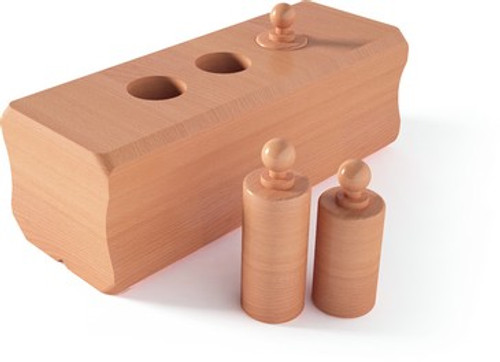
Children learn through discovery - the use of Montessori materials (sets of letters, blocks and science experiments) allows children to learn by correcting their own mistakes rather than relying on a teacher to give them the correct answer.
Children most often learn alone during times of deep concentration. During these spontaneous and self-chosen times, the child should not be interrupted by their teacher.

The hand is closely connected to the developing brain in children. As such, children must physically touch the items such as shapes and letters that they are learning about - not simply watch the teacher, laptop or TV screen to describe these items.
Preschool children at Montessori typically direct their own learning. A Montessori classroom is well structured and comprehensively stocked to allow children to choose sections from Practical Life (fine and gross motor skills), Sensorial (senses and brain), Language, Mathematics, Geography, Science, and Art.

The function of a teacher is to introduce children to these materials while otherwise being an observer in a classroom where students are encouraged to help and teach each other. Montessori schools are proud to be accommodating of individual students' specific personalities and needs rather than viewing them as part of a classroom.